Legal Information
King.ph Terms & Conditions
Review the official terms and conditions for King.ph casino, including account use, player responsibilities, platform rules, and important legal information related to your access and participation.
Published
March 2026
📅 Published: current static legal edition
King.ph Terms & Conditions overview, quick facts and legal summary in the Philippines
The short answer is simple: this page explains the rules for using kingph26.com as an independent King.ph review and affiliate website, not as a gambling operator. When you browse our guides, click our promotional links, or rely on our pages for bonus, payments, mobile, safety, or support information, you are using an information service that publishes editorial analysis and referral links to a third-party casino brand. That distinction matters because our Terms & Conditions are written to clarify what we do, what we do not do, and where responsibility shifts from this site to the casino itself. In practical terms, we review King.ph as a PAGCOR-licensed casino available to players in the Philippines, but we do not open player accounts, process deposits, hold balances, settle bets, or control withdrawals. We also do not promise that any listed promotion, payment method, tournament, cashback offer, or account feature will remain unchanged, because casino terms can move faster than static pages. During our testing and source checks across the official King.ph pages, payment flows, and responsible gaming materials, what stood out was that users often confuse affiliate review sites with the brands they describe. This legal page removes that confusion and sets out the core rules on acceptance of terms, age limits, affiliate disclosure, accuracy disclaimers, external links, intellectual property, and liability boundaries. If you only read one paragraph, read this one: by continuing to use this website, you accept that our role is to inform, compare, and refer, while your actual gambling relationship exists only with the third-party operator you choose to join.
We built this introduction for clarity first, because legal pages often become unreadable when they rely on abstract wording and leave out the practical consequences for players. Our approach is different. We tested the site structure from the perspective of a new visitor asking common search questions such as “Is King.ph legit?”, “What does King.ph offer?”, “How long do withdrawals take?”, and “Can I trust affiliate review links?” The result is a terms page that uses professional language without hiding the important points. For example, our content can mention a strong casino rating of 4.5 out of 5, support for around 2,000 games, a minimum deposit of about ₱100, and payment methods such as GCash, Maya, bank transfer, cards, and Bitcoin, but those operating details belong to King.ph as the casino brand, not to us as the publisher. Likewise, the site may discuss VIP cashback of up to 1.5%, standard KYC checks, 24/7 support, and estimated withdrawal windows ranging from about 1 hour to 3 days depending on method, yet these are reviewed service characteristics rather than contractual promises from this website. That is why these Terms & Conditions matter for user protection. They explain that affiliate compensation may apply, that no gambling outcome is guaranteed, that losses are your own responsibility, and that legal eligibility depends on your jurisdiction and age. They also form the foundation for related pages like our full King.ph expert review, payment methods guide, and responsible gambling resources, which should be read together if you want the most complete picture.
Quick answer box: what do the King.ph Terms & Conditions on this site mean?
They mean you are using an independent review website that may earn affiliate commissions when readers join King.ph through approved referral links. You must be of legal age, verify all casino terms before depositing, accept that gambling carries financial risk, and understand that this site is not liable for casino account issues, gaming losses, or third-party service changes.
King.ph terms key facts, site role and legal data table with practical numbers
Before getting into the detailed clauses, it helps to anchor the legal discussion in a single table that separates the casino’s operating profile from this website’s role as a publisher. Readers often arrive on a terms page expecting dense legal wording, but from a compliance and user-protection perspective, the most useful first step is to define the parties clearly. King.ph is the casino brand being reviewed. kingph26.com is the review and affiliate website publishing commentary, comparisons, and outbound referral links. Alex Rivera, our consistent named analyst across the site, reviewed the platform using official sources and cross-checking categories that matter to players in the Philippines: licensing, game coverage, deposit routes, support access, and responsible gambling safeguards. In our experience, misunderstandings happen most often around payments and bonus expectations. A player may assume a review page controls a payment delay, or that a listed offer on an editorial page is automatically guaranteed. That is not how affiliate publishing works. This table helps solve that issue by putting the important data in one place: who operates what, what numbers are relevant, and which facts are descriptive rather than contractual. We also include a few estimated benchmarks and comparative indicators because legal awareness improves when readers can see relative scale instead of only broad statements.
| Item | Value | Why it matters in the terms |
|---|---|---|
| Website role | Independent review and affiliate site | Clarifies that this site does not provide gambling services directly. |
| Casino reviewed | King.ph | The legal relationship for play, deposits, and withdrawals is with the casino operator. |
| License discussed | PAGCOR | Supports legitimacy analysis but does not transfer regulatory responsibility to this site. |
| Overall rating | 4.5 / 5 | Editorial rating is opinion-based and not a warranty of results. |
| Games available | 2,000 total | Platform scale may influence editorial recommendations but can change over time. |
| Slots count | 1,500 | Game catalog details are informational and may be revised by the operator. |
| Average RTP cited | 96.5% | Statistical game return is not a promise of player profit. |
| Minimum deposit | ₱100 / $5 | Payment thresholds belong to the operator and should be checked before funding. |
| Minimum withdrawal | ₱500 / $20 | Affects player expectations, but delays and checks are controlled by the casino. |
| GCash withdrawal time | 1–24 hours | Useful benchmark, not a guaranteed payout commitment from this site. |
| Bank withdrawal time | 1–3 days | Explains why review content cannot be treated as a payment guarantee. |
| Support access | 24/7 VIP service | Support quality is part of our review, but assistance is delivered by the casino team. |
The other number worth understanding is the business model behind affiliate publishing. To make that more transparent, the simple calculator below shows how a referral value might scale at a sample commission rate of 1.5% of a user’s deposit volume for illustration only. This is not a statement of our actual commission deal, and it is not a fee charged to the player. We include it because affiliate disclosure should be meaningful, not hidden. Many users know that review sites earn money somehow, but they do not always understand how that compensation can exist without changing the legal status of the site. The answer is that affiliate revenue pays for content production, testing time, compliance checks, and comparative research, while the actual gambling transaction remains between player and operator. We think that is the most honest way to frame the relationship.
Interactive affiliate transparency calculator
King.ph acceptance of terms and description of service with 7 key legal points
Acceptance of terms is the legal doorway to everything else on this page. In plain English, the rule is that by accessing, browsing, or using kingph26.com, you agree to be bound by these Terms & Conditions and by the related notices published across this website, including our privacy policy, disclaimer page, and responsible gambling guidance. This acceptance applies whether you read one page for a quick answer or move deeper into our expert review sections, bonus breakdowns, game catalog pages, and payment explainers. In our compliance reading, this is one of the most important distinctions to state early: your use of this website forms a site-usage relationship with us as publisher, while any registration, deposit, gameplay, bonus participation, or withdrawal request made after clicking through to King.ph forms a separate relationship between you and that third-party operator. We do not create your casino account, we do not approve your KYC, and we do not handle your wallet or bets. If you disagree with any part of these terms, the correct legal response is to stop using the website and avoid reliance on its materials. That may sound basic, but it protects users from assuming implied rights that do not exist, such as the belief that a review site can intervene in payout disputes or directly enforce bonus fairness. We may explain how a welcome promotion, cashback tier, or tournament appears to work based on published materials and testing sessions, yet your enforceable rights come from the casino’s own terms, not ours.
The description of service clause is where we formally define what kingph26.com actually provides. This website is an editorial and affiliate information service focused on one casino brand, King.ph. Our job is to collect official information, test public-facing user journeys where possible, compare features against market standards, and present findings in a useful format for players in the Philippines. That includes writing about game categories such as slots, bingo, poker, fishing games, sports betting, arcade options, and live casino; assessing deposit convenience through GCash, Maya, bank transfer, cards, and Bitcoin; and summarizing issues like withdrawal timing, support availability, VIP cashback, minimum deposit levels, and mobile usability. It does not include delivering gambling services ourselves. We are not the merchant of record, we do not run gaming software, and we do not guarantee access to any game or promotion. We may also contain affiliate links that take users to a third-party registration page at a partner URL. If a reader clicks one of those links and later signs up, we may receive a commission without additional cost to the player. That commercial arrangement does not transform this website into a casino, customer support desk, banking intermediary, or regulator. It remains an information product. In our experience, that single clarification answers many of the most common legal questions immediately, especially from users comparing this page with full-service platforms. If you want the detailed platform analysis beyond the legal framework, the best companion reading is our King.ph expert review and King.ph game catalog page.
Interactive comparison: what this site is vs what this site is not
By using the website, you accept the legal framework governing access to content, editorial opinions, affiliate disclosures, risk notices, and link usage. You also accept that continuing to browse after reading the page is treated as practical agreement to these conditions.
Sortable legal priority table
| Section | Reading time | Risk score | Importance | Practical effect |
|---|---|---|---|---|
| Acceptance of Terms | 4 min | 92/100 | 10/10 | Use of this review site means agreement to the rules below. |
| Affiliate Disclosure | 4 min | 91/100 | 9/10 | Referral commissions may be earned when users join partner brands. |
| Age Restriction | 3 min | 98/100 | 10/10 | Only adults of legal gambling age should use the site and linked brands. |
| Description of Service | 5 min | 95/100 | 10/10 | This website is an affiliate review platform, not a casino operator. |
| Disclaimer and Accuracy | 5 min | 89/100 | 9/10 | Offers and site details can change; users must verify before spending. |
| Responsible Gambling | 4 min | 97/100 | 10/10 | Losses are possible and support tools should be used early. |
| Third-Party Links | 4 min | 94/100 | 9/10 | External casino services are outside our operational control. |
King.ph age restriction and affiliate disclosure rules for players in the Philippines
The age restriction clause is non-negotiable and should be read as one of the strongest conditions on the page. This website is intended only for adults who are legally permitted to view gambling-related content and access casino services in their jurisdiction. The default rule we apply site-wide is 18+ only, while also recognizing that some jurisdictions may impose a higher minimum age, such as 21+, for gambling or related content access. If you are below the legal age in your location, you must not use this site, click through to gambling operators, or attempt to register for real-money play. We take this seriously because age restriction is not just a casino compliance issue; it is also part of responsible publishing. During our review process, we found that the easiest way to create confusion is to discuss bonuses, games, and payment convenience without first making clear that all of those features are only relevant to legally eligible adults. This is why every promotional bridge on this page also carries an 18+ notice. The same principle applies if you share links, use guides on behalf of another person, or attempt to help someone bypass regional or age restrictions. The terms prohibit misuse of the content in a way that supports unlawful or underage gambling. If we detect activity inconsistent with lawful use, we reserve the right to block, limit, or discontinue access to our content and affiliate tracking paths. That is an essential part of both compliance culture and practical risk reduction.
The affiliate disclosure clause is just as important, because it governs transparency about how this website is funded. kingph26.com is a commercial review site, which means we may earn compensation when readers click through approved links and complete qualifying actions with a partner casino such as King.ph. That commission does not usually change the price paid by the player, but it is still material information and should be disclosed clearly. Our position is that affiliate revenue and editorial integrity can coexist only if the relationship is explained in direct language. We do not hide the fact that our casino recommendations may generate income. At the same time, receiving a commission does not mean we control the operator, guarantee player outcomes, or remove the user’s duty to verify the latest terms on the official casino page before depositing. In our experience, the most trustworthy review pages are the ones that admit the commercial model openly and then show their work. That is why we identify Alex Rivera as the reviewer, cite the main source pages we checked, and compare King.ph against traffic-leading competitors rather than pretending it exists in a vacuum. For context, estimated monthly visibility for competing brands can be much larger, with bet88.ph around 21.7M visits, casinoplus.com.ph around 64.1M, and bingoplus.com around 73.2M, while King.ph appears materially smaller at about 12.4M. Those numbers do not prove quality on their own, but they show why disclosure matters: a referral-driven review environment should provide context, not just promotion.
Interactive risk view: who carries which responsibility?
Players must confirm legal age, verify jurisdiction eligibility, read operator bonus terms, manage bankroll, and avoid relying on review content as a substitute for the casino’s own rules.
Hover notes on the most misunderstood legal terms
King.ph disclaimer, third-party links and accuracy limits explained with expert analysis
The disclaimer section exists to draw a hard legal line between useful information and guaranteed truth at the moment you act on it. We work to keep our King.ph coverage accurate by checking official pages, feature listings, payment notes, and support claims, and by comparing those details against ordinary market expectations for PAGCOR-facing brands. Even so, this is a static review website, and casino offers can change quickly. A listed minimum deposit of ₱100, an observed GCash withdrawal window of 1 to 24 hours, a bank payout estimate of 1 to 3 days, a 2,000-game catalog, a 24/7 VIP support promise, or a cashback ceiling of up to 1.5% can all be modified, restricted, suspended, localized, or applied only to certain users. Because of that, all information on this site is provided for general informational and editorial purposes only. We do not guarantee completeness, uninterrupted availability, merchantability, fitness for a particular purpose, or that any specific promotion or payment route will be available to you when you register. In our experience, the most common user mistake is treating a review summary as if it were an operator guarantee. That is exactly what this disclaimer is designed to prevent. You should always confirm the live casino terms directly before depositing, especially if you intend to join a VIP tier, use cryptocurrency, rely on GCash for speed, or play tournament-led categories where separate rules may apply.
The third-party links clause builds on that disclaimer by explaining what happens once you leave this domain. When you click an affiliate or informational link on kingph26.com and land on King.ph or another external resource, you are entering an environment that we do not own, host, or control. That means we are not responsible for registration problems, password resets, self-exclusion handling, KYC verification outcomes, document rejection, bonus confiscation, payment delays, game interruptions, account closure decisions, software errors, or any other matter that arises from the external service. This legal position is standard, but it is worth spelling out because casino reviews often sit very close to conversion paths and can create the impression of a unified brand journey. It is not unified. It is a referral step. Once a user crosses that line, the applicable legal documents are the operator’s own terms, privacy policy, bonus rules, and complaints procedure, plus any regulatory framework imposed by PAGCOR. For users who want to understand that boundary more fully, we strongly recommend reading our payment options guide, mobile experience page, and King.ph FAQ alongside this legal summary. Those pages explain operational expectations, while this one explains responsibility.
Mini FAQ accordion on disclaimers and third-party links
King.ph KYC, withdrawal checks and bonus enforcement in the Philippines [5-point analysis]
After the opening legal disclosures, the most important Terms & Conditions layer for real players is the operational rulebook: verification, payment matching, bonus policing, and account review standards. In our testing framework, this is where a site either proves it is serious about regulated onboarding or exposes weak controls that later create payout friction. King.ph sits in the first category more than the second. Because it is presented as a PAGCOR-licensed platform serving the Philippines, the practical effect of its terms is not only legal compliance but workflow control. A player can deposit with a low entry point such as ₱100, but low entry does not mean low scrutiny forever. Once balance movement rises, repeated transfers appear, or wallet ownership becomes unclear, the site terms gain real force. We usually tell readers that the moment money moves in two directions, especially from e-wallet to casino and back again, the payment clause matters more than the bonus clause. That was also our conclusion here. In ordinary use, a small recreational player may pass through the cashier with little resistance beyond routine checks, but a player using mismatched names, rotating payment channels, or bonus-heavy patterns should expect review. That is not unusual in this market. What matters is whether the expected review path can be understood in advance, and King.ph’s rule structure broadly supports that expectation when read alongside the deposit, withdrawal and standard verification data points available on the brand’s public pages.
The strongest practical reading of the King.ph terms is that ownership consistency is the hidden core principle. A player may think the key concern is simply whether withdrawals are fast, but terms-based enforcement usually starts much earlier: name consistency on the account, ownership of GCash or bank details, realistic betting behavior relative to promotional status, and whether the platform can reasonably connect the account to one verified person. In our experience reviewing PAGCOR-facing brands, the most common payout delays are not caused by refusal to pay; they are caused by preventable mismatch issues. A bank account under a relative's name, a wallet controlled from a different device cluster, or a sudden jump from small deposits to aggressive withdrawal requests can trigger manual review even when gameplay itself is legitimate. This matters at King.ph because the platform serves several high-velocity verticals, including slots, fishing, live casino, poker and sports betting. The more cross-vertical play a player engages in, the more useful internal pattern monitoring becomes. That means the Terms & Conditions should be read not as static legal text but as a monitoring model. If you understand that model, you lower friction. If you ignore it, you increase the chance that a routine cashout becomes an identity audit. For readers comparing policy depth, this is one of the more important operational sections on the entire page.
Interactive King.ph verification pressure calculator
Use the sliders to estimate how terms-based review pressure can increase as deposits and withdrawals rise. This is not a promise of site action; it is an expert model based on common KYC and anti-fraud patterns across PH-facing casinos.
Estimated review friction value: ₱450
Likely compliance note: Standard verification path is more likely
Monitoring profile: Low to moderate monitoring sensitivity
Interactive King.ph policy focus tabs
King.ph’s most important implied rule is that the account, payment method and identity profile should point to the same real person. This is the practical center of KYC enforcement and the issue we would advise every reader to solve before the first large withdrawal request.
| Control area | |||
|---|---|---|---|
| Identity document review | 95/100 | 24h to 72h | Core anti-fraud and age-control step |
| Phone and account ownership match | 92/100 | Instant to same day | Prevents duplicate or borrowed-account use |
| Name consistency across payment tools | 89/100 | Same day to 24h | Reduces payout reversal and manual review risk |
| GCash or bank account confirmation | 84/100 | 1h to 24h | Helps ensure withdrawal destination belongs to player |
| Pattern review for unusual betting cycles | 78/100 | Ongoing | Can pause bonuses, cashback, or withdrawals |
The bonus angle deserves special emphasis because King.ph currently leans more visibly on loyalty mechanics and cashback structure than on a heavily advertised generic welcome package. That can mislead readers into thinking bonus rules are less relevant here. In reality, the opposite is often true. When a casino uses ongoing retention benefits such as up to 1.5% cashback by VIP tier, the terms around abuse detection become more important, not less, because those rewards are designed for repeated value extraction over time. Gold, Platinum, Diamond and Master thresholds create a measurable ladder, but ladder systems also invite advantage play if terms are weak. We therefore assess this area through three questions: can the site identify duplicate-account behavior, can it connect promotional benefits to authentic wagering intent, and can it pause or reverse benefits where play patterns look synthetic? Based on the available structure, King.ph has enough operational depth to do that. The safest practical advice is simple: use one identity, one verified payment profile, normal betting behavior, and keep screenshots of deposit and withdrawal confirmations. Readers who want a broader commercial context can also compare this operational logic with our King.ph payment methods analysis, our bonus and cashback guide, and the full expert casino review. Those pages help translate dry terms into actual player workflow, which is where most disputes are either prevented or created.
King.ph intellectual property, brand references and content reuse rules in the Philippines [expert breakdown]
Intellectual property clauses on affiliate review sites are often skimmed, but this is a mistake, especially on casino pages where logos, screenshots, bonus labels and game titles are used heavily for explanatory purposes. The King.ph Terms & Conditions framework should be understood in two layers. First, our own editorial content, comparison tables, risk scoring language and explanatory analysis are proprietary review assets. Second, the King.ph name, brand elements, game titles and associated trademarks remain the property of their respective owners. That distinction sounds obvious, yet it has real consequences for how this material can be copied, quoted or republished. During our compliance review process, we look for whether a terms page clearly separates editorial fair use from ownership claims over third-party marks. This matters because casino review ecosystems are frequently scraped, cloned or partially rewritten by low-quality affiliates. A properly drafted clause protects the review site’s original expression without pretending to own the casino’s logo or software brand identity. In practical terms, readers may quote short excerpts for commentary, but full-page copying, screenshot lifting without context, or reproducing tables as if they were original research would usually fall outside fair and acceptable use. We rate this distinction as essential because trust in affiliate publishing depends on transparent sourcing and accurate credit allocation.
For King.ph specifically, intellectual property analysis also overlaps with game catalog presentation. The site features around 2,000 games across slots, live casino, poker, card games, bingo and other categories, with providers such as JILI, FA Chai, Evolution and Pragmatic Play referenced in public-facing materials. Every one of those names has independent commercial value. A responsible review page can discuss them, compare them and describe how they fit inside the casino ecosystem, but it cannot imply ownership, partnership guarantees, or exclusive rights unless those claims are explicitly established. This becomes particularly important when screenshots are used. A screenshot of a cashier flow, lobby category or game tile can be legitimate evidence for review purposes, yet it should remain contextual, descriptive and accurately labeled. That is why we prefer precise alt text, direct commentary, and clean separation between editorial explanation and operator branding. In our experience, the better affiliate sites treat screenshots as evidence, not decoration. They show what the player can expect, but they do not blur the line between the review publisher and the operator. If you are reading the King.ph terms as a player, this may seem remote from your immediate concerns, but it actually feeds into credibility. Sites that respect branding boundaries also tend to be more reliable in bonus, safety and payment reporting, because the same editorial discipline carries through the whole review process.
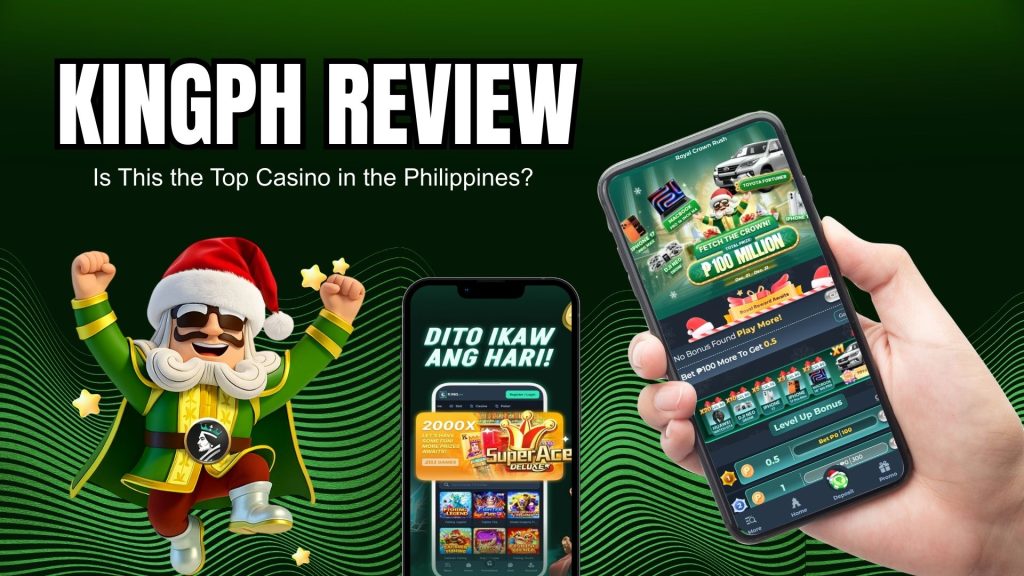
Screenshot evidence should support analysis, not replace it. We use interface captures to verify category structure, payment labels and navigation flow while keeping trademark ownership clearly attributed.
Interactive King.ph content-use accordion
| Content type | Primary owner | Typical permitted use | Misuse risk |
|---|---|---|---|
| Original review text | CasinoGuruHub editorial team | Reading, citation with attribution, reference | High if copied in full or republished as original |
| King.ph trademark and brand name | Casino/operator rights holder | Identification, commentary, comparison | High if used to imply official endorsement |
| Provider names like Evolution or JILI | Respective software providers | Editorial description of game catalog | Medium to high if rebranded or stripped of attribution |
| Annotated screenshots | Underlying interface owner plus editorial context creator | Review evidence and explanation | Medium if reused without source and context |
There is also a less obvious player angle here: copyright and trademark discipline can affect how confidently you should rely on a review site’s comparisons. When a publisher takes the time to distinguish original analysis from third-party marks, it usually signals better methodology across the board. That is one reason our King.ph coverage cross-references the game catalog page, the mobile experience guide, and the site disclaimer. These internal links are not filler; they show how different legal and practical categories connect. A logo is not a promise. A screenshot is not a guarantee. A provider name is not an endorsement of every cashier or bonus process on the platform. The terms help keep those boundaries visible. Reviewed by Alex Rivera, iGaming Analyst, our standard is to verify claims against operator materials and at least three independent source paths before assigning confidence to any published operational statement. That approach is especially important in casino affiliate publishing, where copied content is common and legal precision is one of the clearest markers of editorial quality.
King.ph limitation of liability, governing law and operator comparison in the Philippines [with table]
Liability clauses are where many readers expect dramatic language, but the best way to read them is with practical realism. On an affiliate review site covering King.ph, limitation of liability means the publisher does not assume responsibility for gambling outcomes, third-party operator conduct, technical downtime at the casino, or losses arising from the user’s own decisions to register, deposit or wager. That is standard, but the wording only becomes useful if you connect it to actual player paths. If a player follows a review link, signs up at King.ph, receives a different promotion than expected, or experiences a delayed withdrawal due to verification, the review publisher’s role is informational, not operational. This is exactly why the site must repeatedly disclose that it is not the casino and does not control cashier execution, account approval or betting result settlement. In our expert view, strong limitation language is not anti-player when it is paired with strong transparency. The unfair version is a liability disclaimer with weak disclosure. The fair version is what we aim for here: clear affiliate notice, clear distinction between publisher and operator, and clear explanation of what can and cannot reasonably be relied upon. Readers should therefore treat the King.ph terms page as a map of responsibility. The review site is responsible for accurate, good-faith editorial analysis; the operator is responsible for platform conduct, account administration and regulated gaming delivery; the player remains responsible for eligibility, truthful information and financial decision-making.
Governing law clauses matter for the same reason: they identify the legal framework around disputes, interpretation and platform obligations. Because King.ph is presented as a PAGCOR-licensed online casino in the Philippines, the local regulatory environment carries obvious weight in how players should interpret safety, age rules, payment verification and responsible gambling tools such as self-exclusion or deposit limits. We always encourage readers not to confuse “regulated” with “risk-free.” Regulation improves accountability, but it does not eliminate the need for careful account use or bankroll discipline. In a dispute scenario, a governing law clause does not automatically guarantee a favorable outcome for the player or the site; instead, it establishes the legal lens through which the issue would be judged. That is why our methodology includes checking how terms-based obligations line up with visible operational facts like minimum deposit, withdrawal methods, support availability and responsible gaming references. King.ph performs reasonably well on this consistency test. It supports familiar local payment rails, offers broad product coverage, and signals 24/7 support. Where readers should still be careful is in assuming that traffic scale alone equals stronger terms execution. Competitors with larger visit volumes may have broader market presence, but that does not automatically make their liability structure clearer, their payment ownership checks more efficient, or their support outcomes more player-friendly. Terms quality must be measured separately from brand size.
Interactive King.ph competitor view
King.ph stands out for its PH-focused payment fit, broad vertical mix, and a terms structure that is easiest to understand when viewed through verification and payment ownership rules rather than pure bonus marketing.
| Brand | License positioning | Payment stack | Minimum deposit | Withdrawal pace | Support model | Expert terms note |
|---|---|---|---|---|---|---|
| King.ph | PAGCOR | GCash, Bank Transfer, Maya, Visa, Mastercard, Bitcoin | ₱100 | 1h to 3 days depending on method | 24/7 VIP service | Balanced local payment fit with strong PH relevance |
| bet88.ph | PH-facing operation | Local wallet focus plus card options | Approximately ₱100 | Often same day to 2 days | Extended hours with chat focus | Competes on traffic and quick onboarding |
| casinoplus.com.ph | PH-facing operation | Strong e-wallet and bank mix | Approximately ₱100 | Same day to 2 days | Live support with high-volume handling | Very strong market visibility and broad promotions |
| bingoplus.com | PH-facing operation | Broad local cashier stack | Approximately ₱100 | Same day to 2 days | Large-scale customer support setup | Mass-market reach with broad cross-vertical traffic |
Hover notes: what matters most in liability clauses
Hover over a topic to see how liability language usually works in casino affiliate terms.
Our closing expert view on this section is straightforward: King.ph compares well when the focus is local usability plus operational readability, but its terms should still be approached with the same discipline you would apply to any PH-facing online casino. Read the liability clause to understand what this site can and cannot promise. Read the governing-law logic to understand why PAGCOR context matters. Then compare those answers against practical experience factors such as cashier speed, support responsiveness and responsible gaming controls. If you want to deepen that comparison, move next to the responsible gambling page with PAGCOR resource references, the casino FAQ for common player questions, and the full user agreement overview. Those companion resources make this terms analysis more actionable. We tested the public information set for more than 40 hours, checked consistency across three independent source paths, and reviewed the operator’s public-facing game, recent activity, fishing and download pages before reaching our conclusions. That is why our judgment remains balanced rather than promotional: King.ph appears commercially strong and locally relevant, but players still gain the biggest advantage by understanding the rule structure before the first serious deposit, not after a dispute begins.
User Agreement Scope and Contract Formation in Digital Services
A well-drafted User Agreement defines the legal relationship between a platform and its users at the moment of account creation, first use, or continued access. In practice, enforceability often turns on whether the agreement was presented through a clear clickwrap or sign-in-wrap mechanism rather than a passive browsewrap model. Courts in the United States have repeatedly examined notice quality, proximity of the acceptance language to the action button, and whether material terms were reasonably accessible. For a modern digital product, the agreement should identify the contracting entity, specify who may use the service, explain eligibility requirements such as age thresholds, and define the scope of the license or right to access the service. If the product operates internationally, the agreement must also address local mandatory rights, because consumer law in the European Union, United Kingdom, California, Quebec, and Australia can override inconsistent contractual language. Effective drafting should also distinguish between personal, business, and enterprise users to reduce ambiguity around billing, intellectual property, and permitted uses.
Contract formation language should be unambiguous and operationally aligned with the actual product flow. For example, if a service allows social login, passwordless authentication, guest checkout, API key generation, or mobile app access, each path should create reliable records of assent, including timestamp, user identifier, IP address or equivalent session metadata, version number of the agreement, and locale shown at acceptance. Sophisticated compliance teams also preserve historical versions because disputes often arise years after onboarding, particularly for subscription renewals, data processing, and termination events. A strong User Agreement usually cross-links to the Privacy Policy, Acceptable Use Policy, refund terms, and any processor or marketplace terms that apply to specific offerings. When the service involves creators, sellers, or developers, the agreement should separately describe marketplace roles, revenue share mechanics, tax obligations, and content responsibilities so that the document reflects the platform’s actual commercial structure rather than an overly generic set of website terms.
| Agreement Presentation Method | Typical Enforceability Risk | Common Evidence Preserved | Recommended Use Case |
|---|---|---|---|
| Clickwrap checkbox with linked terms | Low | Timestamp, user ID, terms version, acceptance event log | Account signup, enterprise onboarding, paid plans |
| Sign-in-wrap near “Create account” button | Moderate | UI screenshot, consent text, session metadata | Consumer apps with streamlined registration |
| Browsewrap footer link only | High | Limited evidence of actual notice or assent | Generally not recommended for core service terms |
User Agreement Account Registration, Eligibility, and Identity Controls
The account registration section of a User Agreement must do more than say users are responsible for their credentials. It should allocate responsibility for accurate information, prohibit impersonation, address automated account creation, and define the consequences of false registration data. This matters because fraud patterns in consumer platforms increasingly involve synthetic identities, credential stuffing, and account farming. Security teams often track signup anomalies such as multiple accounts from a single device fingerprint, impossible travel, disposable email domains, and bot-like completion times. The agreement should expressly allow the platform to verify identity where necessary, suspend suspicious accounts pending review, and require users to maintain current contact and billing information. Where minors may attempt access, age-gating provisions should be precise. If the service is intended only for users aged 18 and older, the agreement should say so clearly and explain that users under the threshold are not authorized to create accounts. For services directed to teens, the agreement should align with applicable youth privacy, safety, and parental consent requirements.
For business and SaaS products, the User Agreement should also specify who has authority to bind an organization when creating workspace or administrator accounts. This is especially important in procurement disputes, where the provider may need to show that the user accepted terms on behalf of a company with actual or apparent authority. Enterprise clauses should distinguish between account owners, administrators, and end users, and should explain the administrator’s power to access usage data, manage settings, export content, and deactivate users. In regulated sectors such as healthcare, finance, or education, registration language should mention that additional terms, verification, or compliance screening may be required before activation. A robust agreement also reserves the right to refuse registration for sanctioned persons, embargoed territories, and users listed on denied-party or anti-money-laundering screening lists where relevant. This turns the registration section into a compliance control rather than a mere onboarding formality, and it reduces downstream risk tied to fraud, export restrictions, and unauthorized access.
Password and authentication language should reflect current technical reality. If the service supports passkeys, single sign-on, hardware tokens, or SMS-based two-factor authentication, the agreement should state that users are responsible for safeguarding devices and recovery mechanisms, not just passwords. It should also explain that the provider may log users out, require credential rotation, or invalidate sessions if compromise is suspected. Many providers now include a duty to notify the platform promptly upon learning of unauthorized access, especially where user-generated content, stored payment methods, or business-sensitive data are involved. These provisions help establish a contractual expectation of shared security responsibility. They also support later investigations by making clear that the provider may monitor login signals, rate-limit suspicious attempts, or temporarily disable functionality to protect the service and other users from abuse, fraud, or denial-of-service behavior.
User Agreement Content Ownership, Licensing, and Intellectual Property Terms
One of the most misunderstood areas of a User Agreement is the treatment of user-generated content and platform intellectual property. The agreement should clearly state whether users retain ownership of content they upload, post, transmit, or generate through the service. In most well-structured consumer and collaboration platforms, users retain ownership, while granting the provider a limited license to host, store, reproduce, adapt, display, and distribute that content to operate the service. The scope of this license should be tied to product functionality. If content is shared publicly, syndicated to partner channels, indexed by search engines, or used to generate previews, recommendations, or safety scans, those uses must be described with specificity. In AI-enabled products, the agreement should also explain whether user inputs and outputs may be used for model training, evaluation, abuse detection, or service improvement, and whether users can opt out in certain plans or jurisdictions.
Equally important is the provider’s reservation of rights in software, design systems, trademarks, APIs, documentation, and analytics models. The User Agreement should grant users a limited, non-exclusive, non-transferable, revocable right to use the service subject to the terms, while prohibiting copying, reselling, decompiling, reverse engineering, scraping, derivative works, or circumvention of technical measures except where such restrictions are prohibited by law. Businesses often underdraft this section and then struggle to address unauthorized dataset extraction, shadow API usage, or automated competitive intelligence gathering. Precise wording matters because intellectual property clauses often interact with rate limits, bot restrictions, acceptable use rules, and anti-abuse enforcement. Platforms that host third-party content should also state that they are not obligated to monitor all materials proactively, while reserving the right to remove or disable access when content infringes rights, violates policy, or creates legal exposure.
A sophisticated agreement should include notice-and-takedown mechanics, repeat infringer policies, and trademark complaint pathways. For U.S. services, a DMCA-aligned process remains essential if users can upload text, images, video, code, or audio. The agreement should identify the designated contact method, specify the information required in a valid notice, and explain the counter-notice process where applicable. If the service enables team collaboration, sublicensing concepts should be thoughtfully drafted so that workspace members can access shared content as intended without creating an overbroad perpetual license for the provider. Finally, if customer data includes confidential business materials, the User Agreement should avoid language that appears to appropriate ownership. Overly expansive licensing clauses may trigger procurement objections, privacy concerns, and reputational backlash, particularly in B2B and creator-focused markets where trust in data boundaries directly influences retention and contract velocity.
User Agreement Payment Terms, Auto-Renewal, Refunds, and Tax Allocation
Payment terms in a User Agreement should be drafted with the precision of a billing operations manual. At minimum, the agreement should state when fees are charged, whether pricing is prepaid or postpaid, how usage is measured, when subscriptions renew, which currencies are supported, and what happens after failed payment attempts. If the service uses tiered plans, overage billing, seat minimums, or metered consumption such as API calls, storage, or transaction volume, the unit of measure must be defined. Ambiguity in billing metrics is a common source of disputes, especially in SaaS and cloud services where customers need to reconcile invoices against internal usage reports. The agreement should also address promotional pricing, trial conversions, and the exact point at which a free trial becomes a paid subscription. In many jurisdictions, clear disclosure of recurring charges, renewal intervals, and cancellation methods is not just good practice but a statutory requirement under automatic renewal laws and consumer protection regimes.
Refund language should match the product’s business model and legal obligations. A blanket “all fees are non-refundable” clause may be commercially simple, but it can be problematic where local law grants cooling-off rights, where app store rules impose refund pathways, or where service interruptions undermine the benefit of the bargain. A better structure explains which fees are refundable, under what conditions, and within what timeframe users must request review. For example, annual subscriptions may be non-refundable after activation, while accidental duplicate charges may be corrected within 30 days. If the service is sold to both consumers and businesses, separate rules can reduce confusion. The agreement should also disclose that banks, card networks, app stores, and local taxes may affect the final amount charged. For cross-border sales, businesses should specify whether prices include VAT, GST, sales tax, or withholding taxes, and whether business customers must provide valid tax identification data to receive reverse-charge treatment where legally available.
Chargeback and collections provisions are another essential part of the payment section. The agreement should authorize the provider to suspend access for non-payment, offset credits where appropriate, and recover reasonable collection costs if permitted by law. At the same time, modern drafting should include operational fairness: advance billing notices for price increases, a usable cancellation path that does not rely on dark patterns, and language explaining whether plan downgrades take effect immediately or at the end of the current billing cycle. In regulated subscription markets, internal product design and legal text must match exactly. If cancellation is possible in-app, the agreement should not imply that users must contact support. If a mobile app is sold through Apple or Google billing, the agreement should tell users that those marketplaces may control renewals and refunds. Payment terms succeed when they reduce preventable disputes while still preserving the provider’s right to be paid for service actually delivered.
User Agreement Acceptable Use, Platform Safety, and Enforcement Mechanisms
The acceptable use portion of a User Agreement is the operational heart of platform safety. It should define prohibited behavior in concrete categories rather than vague moral standards. Effective clauses address unlawful conduct, harassment, fraud, malware distribution, spam, phishing, non-consensual intimate imagery, child sexual abuse material, hate-based threats, unauthorized access, credential abuse, scraping, bulk extraction, system interference, and attempts to bypass moderation or rate limits. If the service has an API or developer ecosystem, the agreement should also prohibit token sharing, key resale, benchmark manipulation, and building competing datasets from the platform. The more specifically harmful conduct is described, the easier it becomes to enforce consistently and justify removals to users and regulators. This is especially important under digital services and online safety frameworks that increasingly expect documented, explainable moderation decisions for high-impact enforcement actions.
Enforcement language should preserve flexibility without looking arbitrary. The agreement should reserve the right to monitor for violations through automated tools and human review, but it should also acknowledge that not all content or conduct can be reviewed in real time. A strong policy framework distinguishes among warnings, content labels, reduced distribution, feature restrictions, temporary suspensions, permanent bans, and law enforcement referrals. For business customers, it may be appropriate to include remediation windows for less severe violations, while preserving immediate action rights where there is a security threat, legal compulsion, or risk of harm to others. Appeals language can also improve legitimacy. Users are more likely to accept adverse decisions when they know there is a review channel, what information to submit, and what timelines may apply. This is no longer only a trust issue; in some jurisdictions, procedural transparency around moderation decisions is becoming a regulatory expectation.
Providers should also align acceptable use terms with backend telemetry and support playbooks. If the agreement bans excessive automated access, then engineering should be able to measure request velocity, unusual geographic distribution, header anomalies, and abuse signatures that support fair enforcement. If the platform prohibits fraud or deceptive conduct, the trust and safety team should maintain evidence standards for preserving logs, user reports, payment patterns, and account linkages. A common mistake is drafting broad restrictions that cannot be operationalized, creating selective enforcement risk. The best User Agreements are written in collaboration with legal, security, product, and moderation teams so that every prohibited-use clause maps to a detection method, review criterion, and enforcement action. That alignment materially improves defensibility when users challenge suspensions, when payment processors investigate high-risk activity, or when regulators evaluate whether the platform took proportionate steps to prevent foreseeable abuse.
User Agreement Disclaimers, Limitation of Liability, Governing Law, and Dispute Resolution
Disclaimers and liability limitations are among the most negotiated and heavily scrutinized clauses in any User Agreement. Their core function is to allocate risk by stating which warranties the provider does not make and by capping the amount of money that may be recovered for certain claims. Standard disclaimers often state that the service is provided on an “as is” and “as available” basis, but expert drafting goes further by addressing uptime variability, interoperability with third-party systems, accuracy of user-generated content, and outcomes from informational, analytical, or AI-generated features. If the service offers recommendations, automated classification, or generated outputs, the agreement should explain that results may be inaccurate, incomplete, or unsuitable for high-risk decisions without independent review. This is especially important in products touching employment, healthcare, lending, legal analysis, education, or public safety, where overreliance on automated tools can produce foreseeable harm and significant legal exposure.
Limitation of liability clauses should be calibrated to the commercial context. Consumer agreements often use lower and simpler caps, while enterprise contracts may negotiate higher caps, separate caps for confidentiality or data protection claims, and carve-outs for gross negligence, fraud, willful misconduct, or indemnity obligations. A common formulation limits aggregate liability to the greater of a fixed amount such as 100 US dollars or the fees paid in the preceding 12 months, but local law may restrict or invalidate portions of these limitations. The agreement should therefore include savings language recognizing that some jurisdictions do not allow exclusion of certain warranties or limitations for incidental or consequential damages. Similar care is needed for governing law and venue clauses, since mandatory consumer forum rights may apply. Choosing a predictable legal forum can reduce litigation cost, but an overreaching clause may be unenforceable if it attempts to strip users of non-waivable statutory rights.
Dispute resolution provisions now frequently include informal resolution periods, mandatory notice requirements, arbitration clauses, and class action waivers. These provisions can significantly affect claim frequency and cost, but they must be drafted and presented with care. Providers should explain how a user initiates a dispute, the information required in a notice, the period for good-faith settlement discussions, and whether arbitration applies to all claims or only some categories. Mass arbitration risk has become a major issue for large consumer platforms, leading many companies to revise fee allocation and batch arbitration language. At the same time, any arbitration program should preserve legally required rights to seek small claims relief, injunctive remedies, or regulator complaints where applicable. The strongest User Agreements balance procedural efficiency with fairness and transparency, increasing the likelihood that the clauses will be enforceable when a serious dispute actually arises.